
Informational note: This article explains scientific and public health research. It does not provide medical advice or replace professional care.
Inflammation is often described as something to eliminate. In reality, it is one of the body’s most essential defense mechanisms. Without inflammation, wounds would not heal, infections would spread unchecked, and recovery from injury would be impossible.
The problem is not inflammation itself. The problem is when inflammation becomes chronic, subtle, and persistent, continuing long after it is needed. Over time, this low-grade inflammatory state has been linked to a wide range of modern health conditions.
This article explains what inflammation is, why it becomes chronic, and why researchers increasingly view it as a common thread connecting many seemingly unrelated diseases.
What inflammation actually is, and why the body needs it
Inflammation is the body’s natural response to threat or injury. When tissues are damaged or pathogens are detected, the immune system releases signaling molecules that increase blood flow and recruit immune cells to the affected area.
This process, known as acute inflammation, is usually short-lived. It resolves once healing begins. Swelling, warmth, and redness are signs that the body is doing its job.
Acute inflammation is protective. It is not something to suppress by default. Problems arise only when inflammatory signals remain active without a clear reason.

When inflammation becomes chronic
Chronic inflammation is different. It is quieter, less visible, and often goes unnoticed for years.
Instead of a short, targeted response, the immune system remains mildly activated. This ongoing activity can gradually strain tissues, disrupt normal signaling, and interfere with how cells function over time.
Researchers have linked chronic, low-grade inflammation to conditions such as cardiovascular disease, type 2 diabetes, autoimmune disorders, neurodegenerative diseases, and some cancers. The connection is not that inflammation directly causes these diseases, but that it creates a biological environment where damage accumulates more easily.

Why inflammation connects so many different diseases
At first glance, heart disease, arthritis, depression, and metabolic disorders appear unrelated. Yet inflammation plays a role in all of them.
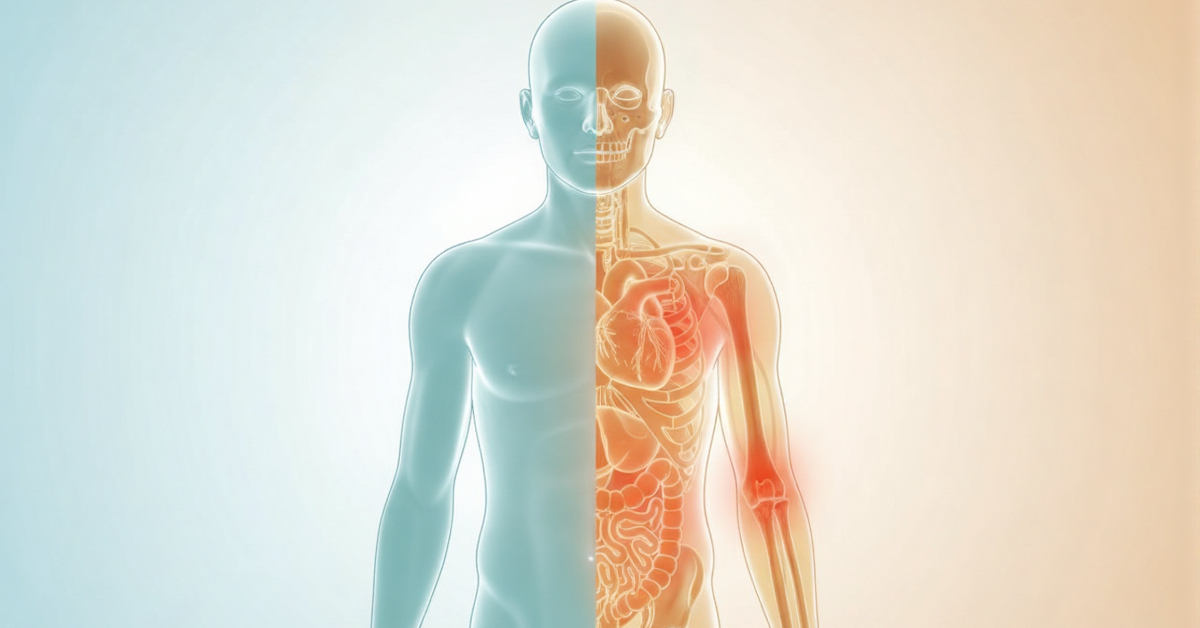
The reason lies in how widespread inflammatory signaling can be. Inflammatory molecules influence blood vessels, insulin sensitivity, brain signaling, immune tolerance, and cellular repair. When these signals remain elevated, multiple systems may be affected simultaneously.
This systemic influence is why inflammation is often described as a common underlying factor rather than a single disease process.
What drives chronic inflammation in modern life
Chronic inflammation rarely comes from one source. It is usually shaped by a combination of biological, environmental, and lifestyle factors.
Common contributors identified in research include:
- Persistent psychological stress
- Sleep disruption and circadian rhythm misalignment
- Highly processed diets consumed regularly
- Physical inactivity and prolonged sitting
- Environmental exposures such as pollution
Stress deserves particular attention. Long-term stress can influence inflammatory signaling through the nervous system and hormonal pathways. This connection is explored further in: What Doctors Are Recommending Today for Stress-Related Health Problems .

The role of sleep, movement, and recovery
Inflammation does not operate independently from daily rhythms. Sleep, physical activity, and recovery periods all influence how inflammatory signals rise and fall.
Poor or irregular sleep has been associated with higher inflammatory markers. Regular movement, even at low intensity, appears to support healthier inflammatory regulation. Periods of recovery allow the nervous and immune systems to recalibrate.
This is why discussions about inflammation increasingly overlap with broader conversations about sleep and stress physiology. For a deeper look at sleep specifically, see: Sleep Deprivation Is a Public Health Crisis .
Why inflammation is not always the enemy
It is tempting to view inflammation as something to eliminate. This framing misses the point.
Inflammation is a necessary part of healing and defense. The goal, from a research perspective, is not suppression but regulation. Healthy systems activate inflammation when needed and resolve it efficiently when the job is done.
Understanding this distinction helps explain why simple solutions or universal anti-inflammatory claims are often misleading.
Evidence-based public resources
The following live resources provide reliable, non-commercial explanations of inflammation from established public health and research institutions:
- National Institutes of Health, inflammation overview: https://www.niaid.nih.gov/research/inflammation
- Harvard Health Publishing, understanding inflammation: https://www.health.harvard.edu/staying-healthy/what-is-inflammation
- World Health Organization, noncommunicable diseases and inflammation-related risk: https://www.who.int/news-room/fact-sheets/detail/noncommunicable-diseases
- National Institute on Aging, inflammation and aging: https://www.nia.nih.gov/health/inflammation-and-aging
Conclusion
Inflammation is not a hidden villain. It is a powerful biological process that becomes harmful only when it loses balance.
By understanding how inflammation works, why it persists, and how it connects multiple systems, researchers are better able to explain why so many modern diseases share common roots.
This systems-level view does not offer quick fixes. It offers something more valuable: clarity about how health is shaped over time.