
Sleep loss is often discussed as a personal lifestyle issue. In reality, it has become a widespread public health concern, affecting productivity, mental health, and long-term wellbeing across entire populations. Short sleep duration is now common in many industrialized countries, shaped by work schedules, technology use, and social expectations rather than individual choice alone.
Understanding sleep deprivation as a systemic issue helps explain why its effects appear across so many areas of health and why simple willpower is rarely enough to address it.
How sleep loss affects attention and cognitive load
Sleep plays a central role in how the brain processes information. When sleep duration or quality is reduced, the brain struggles to maintain attention, manage working memory, and regulate emotional responses. These effects are not subtle. Even moderate, repeated sleep restriction can impair reaction time and decision-making in ways comparable to more obvious stressors.
Researchers describe this as increased cognitive load. Tasks that once felt routine require more mental effort, and errors become more likely. Over time, this persistent mental strain can influence workplace performance, learning, and safety.
Why sleep deprivation is a population-level issue
Large-scale surveys consistently show that a significant portion of adults do not meet recommended sleep durations. Shift work, extended commuting, economic pressure, and constant digital connectivity all contribute. These patterns affect entire communities rather than isolated individuals.
Public health organizations increasingly frame insufficient sleep alongside other lifestyle-related risks, not as a moral failing but as an environmental outcome. According to the Centers for Disease Control and Prevention, short sleep duration is linked with a range of long-term health concerns and reduced quality of life.
What happens in the body during ongoing sleep loss
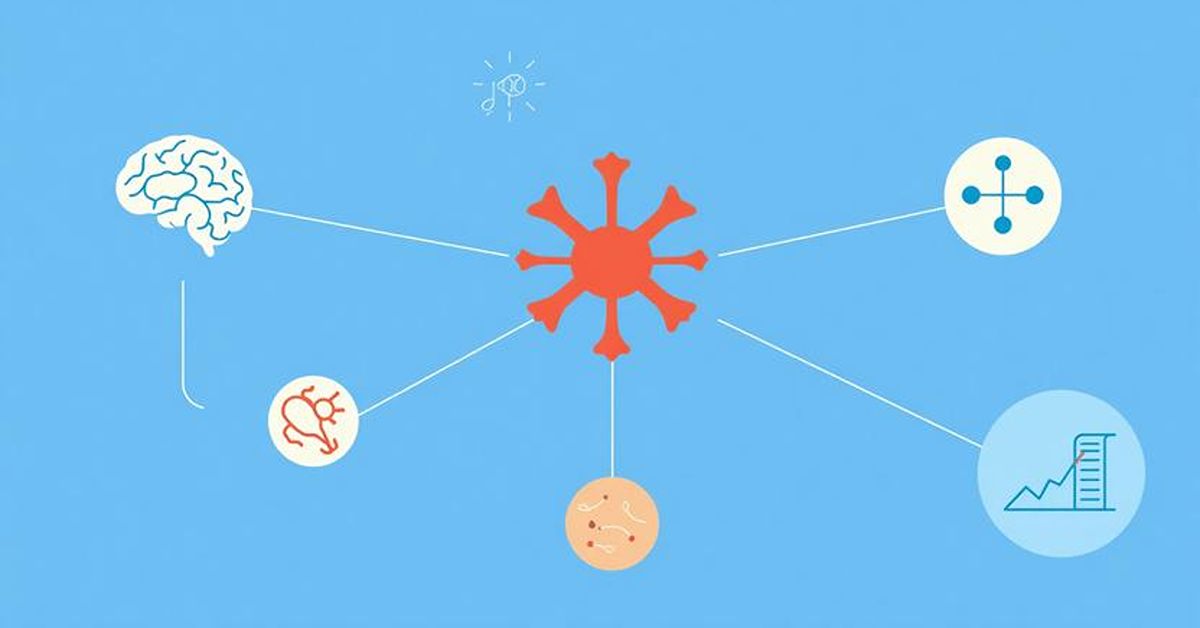
Sleep supports multiple biological systems at once. During healthy sleep, the body regulates immune signaling, balances metabolic hormones, and consolidates memory. When sleep is repeatedly disrupted, these processes become less efficient.
Research suggests that chronic sleep deprivation can alter how the immune system responds to stressors, affect insulin sensitivity, and change appetite regulation. These changes do not act in isolation. They interact with other lifestyle factors such as stress, diet, and physical activity.
This interconnected effect helps explain why sleep deprivation often appears alongside other modern health patterns. Our article on chronic inflammation explores how multiple low-grade stressors can accumulate over time.
Modern environments and disrupted sleep rhythms
Human sleep evolved around predictable light and dark cycles. Modern environments frequently interfere with these rhythms. Artificial lighting, late-night screen exposure, and irregular schedules can delay sleep onset and fragment rest.
This does not mean technology alone is responsible. Social norms around availability and productivity often reinforce late nights and early mornings. Over time, this misalignment between biological rhythms and daily demands becomes normalized.
International health bodies such as the World Health Organization increasingly recognize sleep as a foundational component of mental and physical health, shaped by social and environmental conditions.

Rethinking sleep as a public health priority
Framing sleep deprivation as a public health issue changes the conversation. It shifts attention away from individual blame and toward structural factors such as work culture, urban design, and access to rest-friendly environments.
Institutions like the National Heart, Lung, and Blood Institute emphasize sleep education as part of broader health literacy, recognizing that understanding why sleep matters is a first step toward meaningful change.
Conclusion
Sleep deprivation is not simply about staying up too late. It reflects how modern life interacts with human biology. By viewing sleep through a public health lens, it becomes easier to understand why its effects are so widespread and why solutions require more than individual effort.
Improving sleep outcomes begins with understanding the systems involved, the environments we live in, and the limits of personal control. This perspective does not offer quick fixes, but it does offer clarity.