

In many knowledge-based workplaces, the idea of “slowing down” rarely appears as a formal policy or structured program. Instead, it surfaces in quieter, less defined ways: in how people describe their days, how teams talk about focus, and how professionals explain the need for mental space inside fast-moving roles.
Unlike discussions centered on productivity systems or performance metrics, references to slow movement in work environments are often indirect. They do not describe a practice to adopt or a routine to follow. Rather, they function as language—ways of expressing contrast with speed, overload, and constant cognitive switching.
This article looks at how slow-movement language appears in real knowledge-work settings, what it signals culturally, and why it resonates without becoming explicit instruction.
This workplace perspective builds on a broader cultural shift explored in: Why Slow Movement and Breathing Are Gaining Attention in Modern Work Culture.
Slow Movement as a Descriptor, Not a Practice
In knowledge-work environments, “slow movement” is rarely literal. Most people using the phrase are not referring to physical activity at all. Instead, they are describing a shift in pace: fewer abrupt transitions, less rushing between mental states, and more space between demands.
This kind of language often emerges in roles defined by information flow rather than physical output. When work involves constant evaluation, coordination, and decision-making, the body may remain still while the mind moves quickly. In that context, slow movement becomes a metaphor for reducing internal acceleration, even if nothing visibly changes.
Professionals may use this language to articulate something that feels difficult to quantify: the difference between a day filled with uninterrupted focus and a day fragmented by constant alerts.
Where the Language Appears in Everyday Work Life
Rather than appearing in official job descriptions or workflows, slow-movement language tends to show up in informal spaces:
- Post-meeting reflections, where people describe needing time to “reset”
- Internal messages acknowledging a heavy day of decisions or coordination
- LinkedIn posts that reference pacing, attention, or mental bandwidth
In these contexts, the language functions socially. It allows people to acknowledge cognitive strain without medical framing or personal disclosure. Saying that a day felt “fast” or that attention felt “scattered” is often more acceptable than naming stress directly.

Transitions Matter More Than Tasks
One reason slow-movement ideas resonate in knowledge work is that many roles are defined less by individual tasks and more by transitions between them. A single hour may involve reading, responding, deciding, coordinating, and revising—often across different platforms.
In this environment, the cost of switching can outweigh the complexity of the tasks themselves. Language about slowing down often reflects a desire to reduce the frequency or intensity of these transitions, even when workload remains unchanged.
This helps explain why the idea appears across very different industries, from technology and finance to education and consulting. The common factor is not the type of work, but the way attention is continuously redirected.
Why the Concept Spreads Without Clear Definitions
Slow movement remains intentionally vague in workplace conversations. That vagueness is part of its usefulness. Because it is not tied to a single method, discipline, or framework, it can be adapted to different cultures and roles without friction.
For some teams, it may describe fewer back-to-back meetings. For others, it may simply be a way of acknowledging that mental recovery is not instantaneous. The absence of definition allows the term to travel easily across organizations without triggering debates about implementation.
This openness also helps explain why the concept spreads through professional networks rather than formal training programs. It is shared as experience, not instruction.
What This Does — and Does Not — Signal
It is important to separate what slow-movement language reflects from what it does not promise.
It does signal:
- A growing awareness of cognitive load in information-heavy roles
- A preference for non-clinical ways of discussing mental strain
- A cultural shift toward acknowledging pace, not just output
It does not signal:
- A universal solution to workload problems
- A replacement for structural changes in how work is designed
- An expectation that individuals should manage overload alone
Seen this way, slow movement in knowledge-work environments is best understood as a descriptive tool rather than a directive.
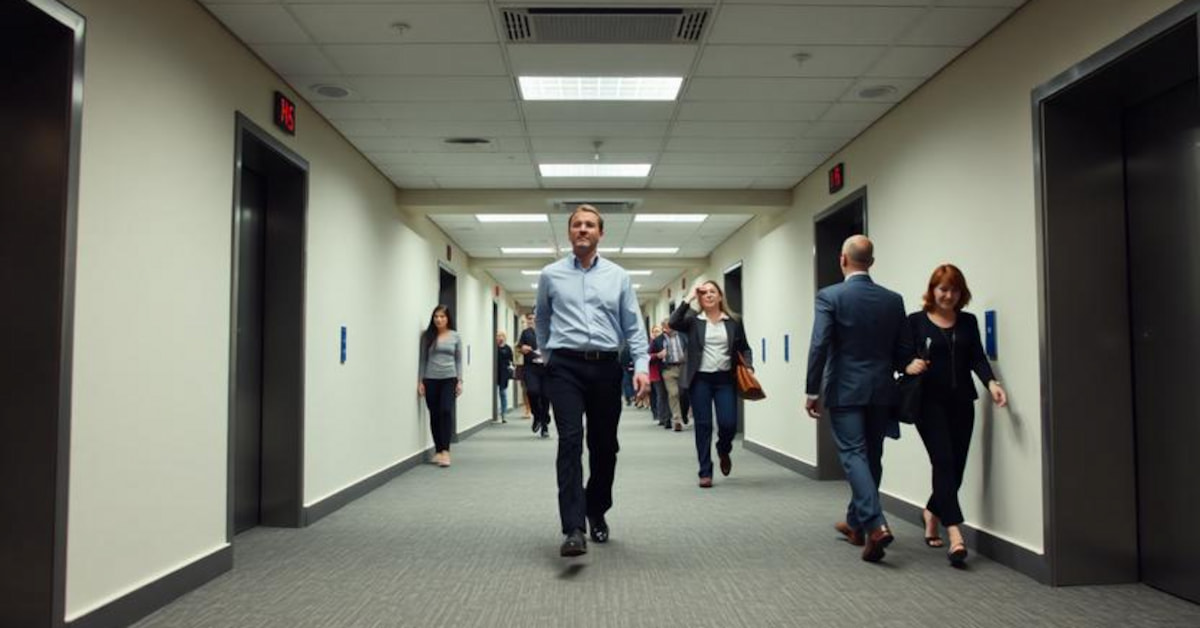
How This Connects Back to Mental Load
At its core, the presence of slow-movement language in work environments reflects concern about mental load: the invisible effort of tracking, switching, and staying responsive across overlapping demands.
The Supporting article in this cluster explores that connection in more detail, explaining how controlled pacing relates to perceived cognitive effort during the workday: What Slow, Controlled Movement Does to Mental Load During the Workday.
For broader context on how stress-related language is evolving in professional settings, you may also find this Pillar article useful: What Doctors Are Quietly Recommending for Stress-Related Health Problems.
Conclusion: A Cultural Signal More Than a Strategy
In knowledge-work environments, slow movement shows up less as an action and more as a signal. It reflects how people are trying to describe pace, attention, and cognitive strain without turning the conversation into advice or diagnosis.
Understanding this distinction helps keep the discussion grounded. Rather than asking how to “apply” slow movement at work, it may be more useful to notice why so many professionals are reaching for the same language—and what that says about the way modern work is experienced.