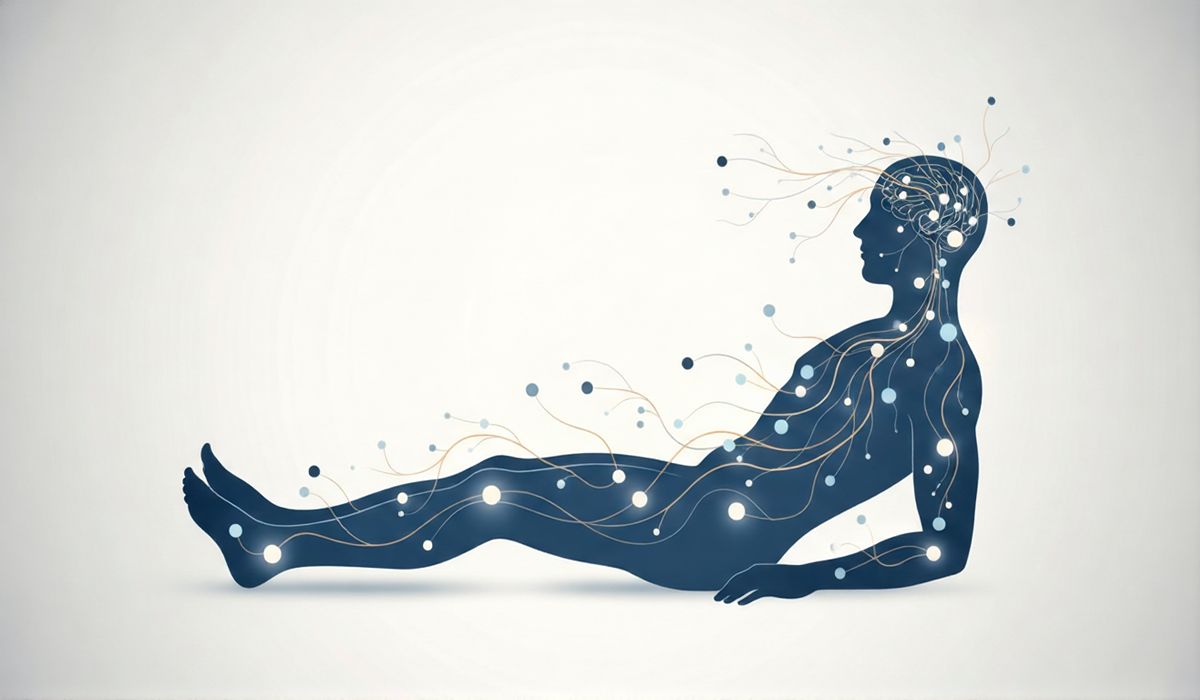
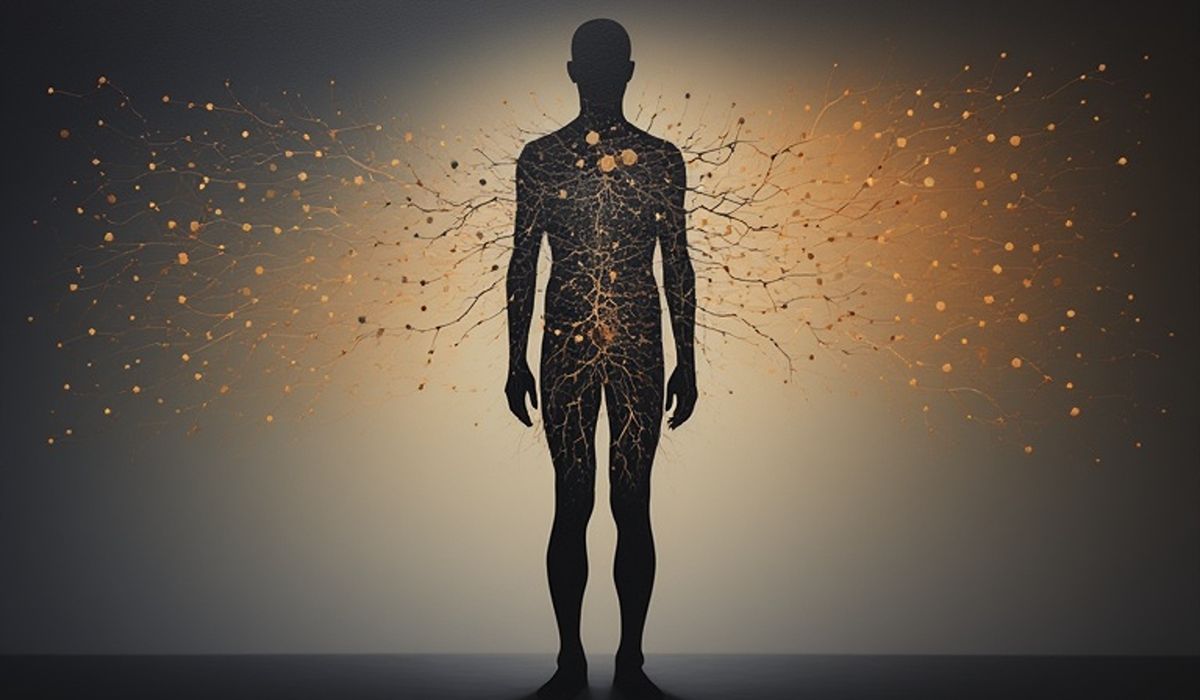
Most people think of stress as something mental or emotional: deadlines, money worries, difficult conversations, long days that eventually pass. But for many people, stress does not stay temporary. It lingers. It changes how the body feels and behaves.
Symptoms may appear slowly or suddenly. Fatigue that does not lift. Digestive discomfort that seems unrelated to food. Skin flare-ups that move or change. A tight chest one week, coordination issues the next. Lab tests often return “normal.” Scans show nothing urgent. Yet the body does not feel normal at all.
This disconnect between how unwell someone feels and how little shows up on tests is one of the most confusing parts of chronic stress. It can lead to doubt, self-blame, or the sense that something serious is being missed.
This article explains why that experience can happen. Rather than treating stress as a feeling or a personality trait, we will look at it as a regulatory force that shapes how the nervous system, immune system, and inflammatory signals communicate across the body. When these systems are pushed out of balance for long periods, the result can feel like illness, even without a single diagnosable disease.
Related reading on PainlessThings
- Inflammation: The Hidden Cause Behind Most Modern Diseases (sideways context)
- What Doctors Are Quietly Recommending for Stress-Related Health Problems (downstream supporting context)
- Sleep Deprivation Is a Public Health Crisis: Here Is How to Fix It Naturally (related system stress)
Stress is not “mental”. It is regulatory
Stress begins in the brain, but it does not stay there. From a biological perspective, stress is the body’s response to perceived threat. That threat can be physical danger, but it can also be uncertainty, overload, and lack of recovery.
When stress becomes chronic, it alters how regulatory systems behave day to day. These systems include the autonomic nervous system, the immune system, and the signalling pathways that help coordinate inflammation. None of these systems works alone. They constantly exchange information. Stress changes the tone of that communication.
Instead of switching on briefly and settling back down, the body can stay partially activated. Over time, the baseline shifts. This is why chronic stress does not always feel dramatic. It can feel vague, scattered, and persistent.
The nervous system as a volume knob
A useful way to understand chronic stress is to think of the nervous system as a volume control, not an on-off switch. In a well-regulated system, stress responses rise when needed, settle when the moment passes, and the body returns to a stable baseline.
Under prolonged stress, that baseline can shift. The nervous system becomes more reactive. Signals that once barely registered begin to feel loud. Normal sensations such as digestion, muscle tension, heart rhythm, and temperature become more noticeable and sometimes uncomfortable.
This does not mean the body is broken. It means the threshold for activation has changed. Small triggers can now produce large responses, not because the trigger is dangerous, but because the system interpreting it is operating at a higher volume.
How stress and the immune system talk to each other
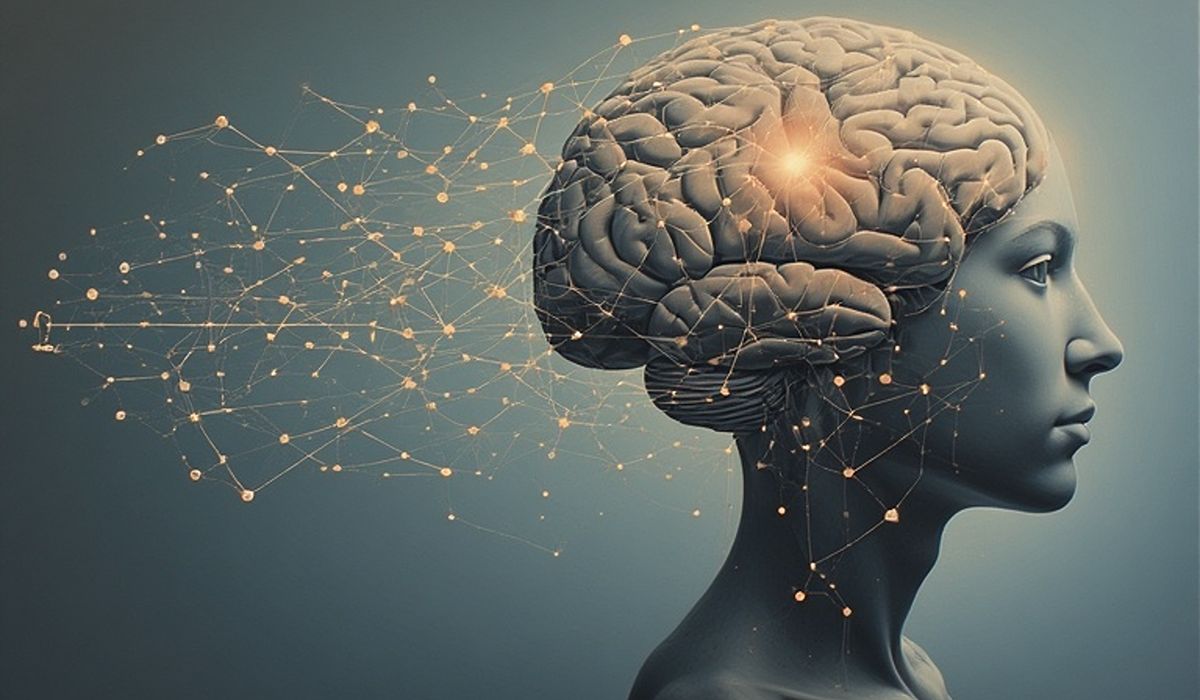
The nervous system and immune system are deeply connected. This relationship is studied in psychoneuroimmunology, which looks at how stress signals and immune activity influence one another.
Under chronic stress, stress hormones and neural signals can alter immune signalling. Immune cells may become more sensitive to “danger” cues. Inflammatory messaging may stay active longer than needed.
Inflammation is not inherently harmful. It is a normal part of repair and defence. The problem arises when inflammatory signalling becomes persistent, diffuse, or poorly regulated. Instead of responding to a clear injury or infection, inflammation can act like background noise, influencing energy levels, pain perception, mood, digestion, and skin function.
Why symptoms feel random and why they move
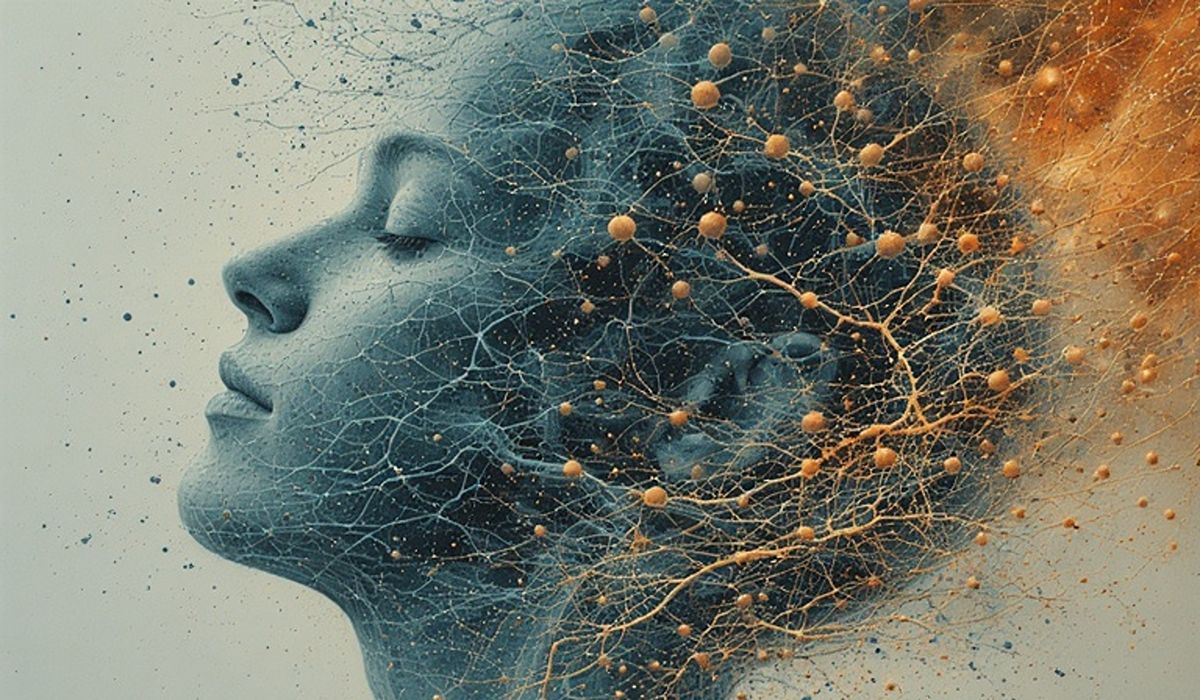
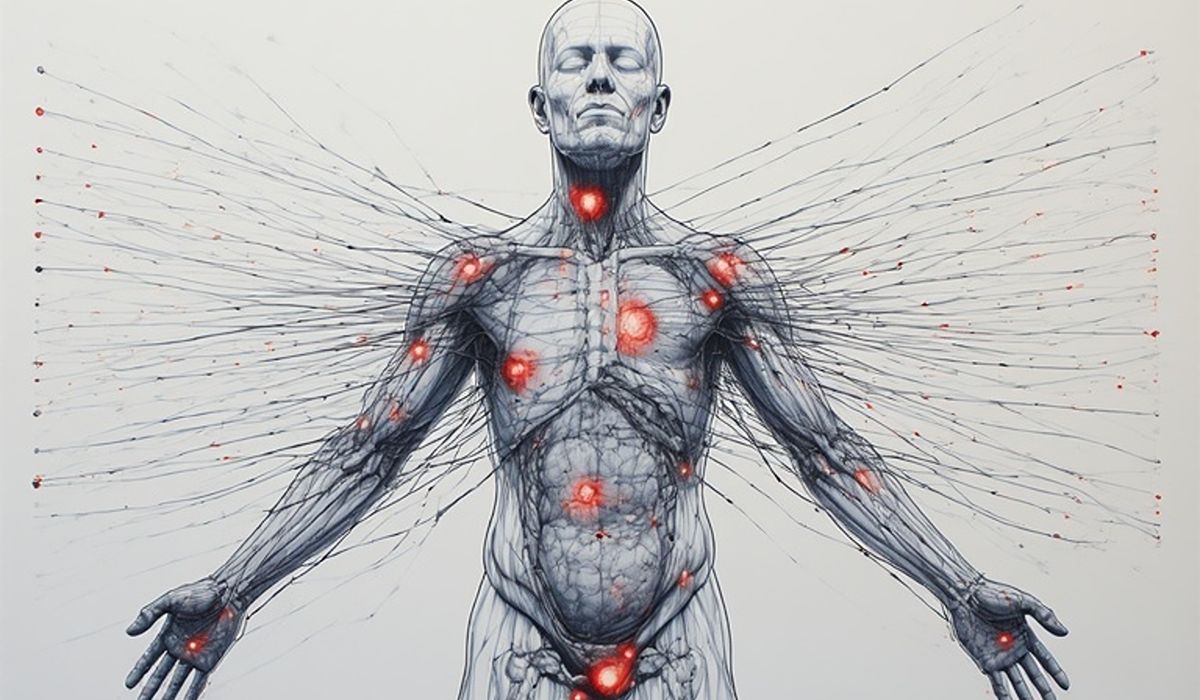
One unsettling aspect of chronic stress is how symptoms can migrate. Digestive discomfort may improve while skin issues worsen. Chest tightness may fade, replaced by muscle tension or coordination changes. Fatigue may lift briefly, then return in a different form.
This can feel random, but it often reflects shared regulation, not separate problems. Many tissues rely on the same underlying systems. Nerves that influence gut movement also influence breathing and heart rhythm. Immune signals that affect joints can also affect skin and blood vessels. Inflammatory mediators circulate system-wide, not locally.
When regulation is unstable, the expression of symptoms can shift depending on context, stress load, sleep, and recovery. The body is not choosing a new problem. It is expressing imbalance through whichever system is most sensitive at that moment.
Why lab tests often come back “normal”
Modern medicine is excellent at identifying structural damage, acute disease, and clear biochemical abnormalities. It is less precise at measuring regulatory strain.
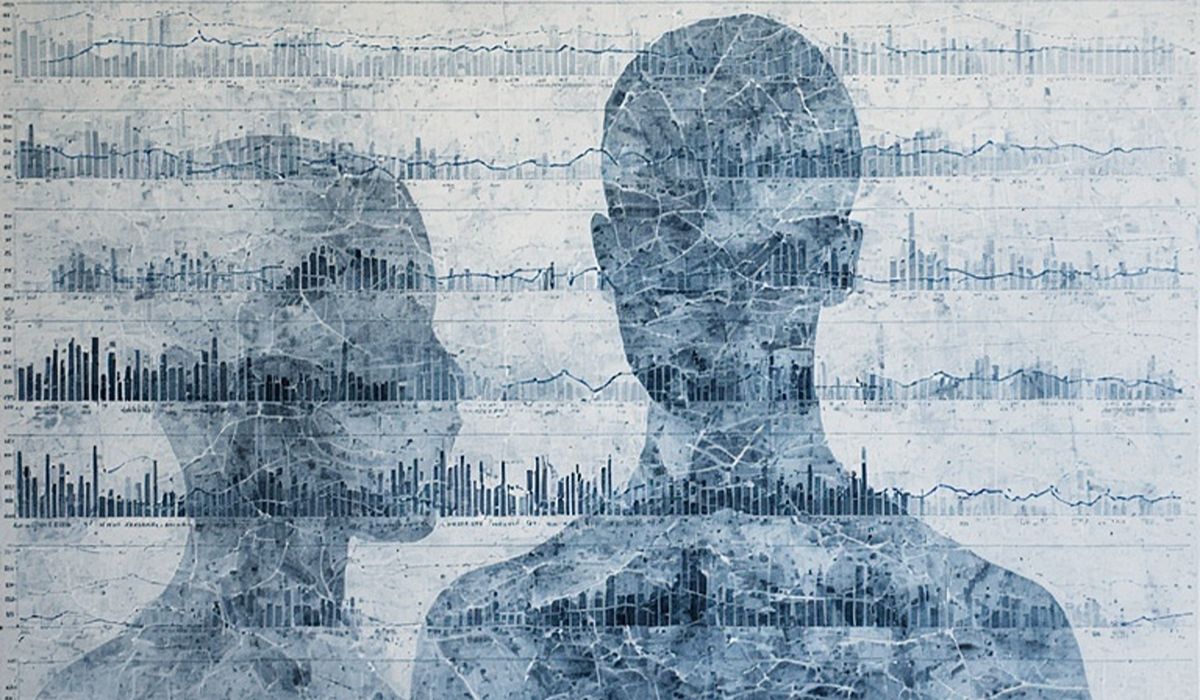
Many stress-related changes can occur within normal reference ranges. Hormones fluctuate without crossing thresholds. Inflammatory markers may be elevated relative to a person’s baseline but still fall within population averages. Nervous system tone can shift without showing up on imaging.
“Normal” often means within expected population limits, not necessarily optimal for a specific individual. This gap can be frustrating. In many cases, it reflects limits in measurement, not a statement that symptoms are imaginary.
Why uncertainty can worsen physical symptoms
Uncertainty itself is a stressor. When symptoms are unexplained, unpredictable, or inconsistent, the brain can remain on alert. The nervous system keeps scanning for threat, which can raise baseline activation further.
This can create a feedback loop. Symptoms appear without clear explanation. Uncertainty increases vigilance. Vigilance amplifies bodily awareness. Heightened awareness intensifies symptoms. This loop does not require conscious anxiety. It can run quietly, even in people who see themselves as calm and resilient.
Understanding the mechanism does not instantly stop the loop, but it often reduces fear. Reduced fear can change how intensely symptoms are experienced, even when the underlying stress load has not yet changed.
Why this does not mean “it’s all in your head”
Few phrases are more damaging than “it’s all in your head.” Chronic stress symptoms are real, embodied experiences. They involve biological processes such as neural signalling, immune modulation, and inflammatory chemistry.
The misunderstanding comes from treating mind and body as separate systems. In reality, they are integrated. Mental stress alters physical regulation because the same networks help govern both. Recognising this does not minimise symptoms. It places them in a framework that better fits their complexity.
Chronic stress as a system-wide regulator, not a single disease
Chronic stress often acts as a modifier rather than a cause of one specific condition. It can amplify existing sensitivities, lower tolerance for normal fluctuations, and reduce recovery efficiency.
This is one reason two people under similar stress can experience very different symptom patterns. Genetics, past experiences, environment, sleep, movement, and existing health context all shape how regulation responds.
Stress does not create illness out of nothing. But it can change how the body manages load, and that change can feel like illness when it persists.
Why these patterns feel more common in modern life
Many aspects of modern life strain regulatory systems over time. Constant information exposure. Irregular sleep. Economic uncertainty. Low physical variability in daily movement. Limited true recovery.
Few of these factors are catastrophic on their own. Together, they can create long periods of partial activation. Human physiology is built for cycles: effort, then recovery. When cycles disappear, regulation often becomes noisier.
As a result, more people experience symptoms that do not fit a single disease model but still affect daily life in a very real way.
What research can and cannot tell us
Research increasingly supports links between chronic stress, nervous system regulation, immune signalling, and inflammation. At the same time, the evidence has limits. Individual experiences vary widely. Cause and effect can be difficult to isolate. Many regulatory shifts are hard to measure directly in everyday clinical settings.
That uncertainty does not invalidate lived experience. It reflects the complexity of the systems involved. Good science often explains patterns before it can measure them perfectly.
Resources
- American Psychological Association: Stress effects on the body
- American Heart Association: Understanding how stress affects the body
- Mayo Clinic: Stress symptoms and effects on the body
- NCCIH (NIH): Mind and body approaches for stress
Conclusion: when the body is asking for regulation, not labels
Chronic stress does not always announce itself clearly. It often shows up as fatigue, discomfort, and shifting symptoms that do not add up neatly on paper. That does not mean nothing is happening.
It can mean the body’s hidden systems, nervous, immune, and inflammatory, are working harder than they were designed to for longer than they can easily sustain. Understanding this does not turn stress into a diagnosis. It turns confusion into comprehension. For many people, comprehension is the first step toward feeling less alone in their experience.