“Inflammation” gets used to explain almost everything now: fatigue, joint aches, brain fog, skin flare-ups, even mood.
Some of that is marketing. Some of it is legitimate biology. And for many adults, the practical question is simpler: are there everyday foods that are consistently linked to lower chronic inflammation risk?
This guide breaks down what “anti-inflammatory” means in research, what evidence is reasonably consistent, what’s still uncertain, and why these choices can matter for adults juggling work, stress, screens, and convenience food.
What “anti-inflammatory foods” means in real-world research
Fact: Inflammation is part of the immune system’s normal response to injury or irritants. It’s not automatically “bad.” :contentReference[oaicite:0]{index=0}
Fact: When researchers talk about chronic inflammation, they often mean longer-lasting, low-grade immune activation that shows up alongside many long-term conditions. It’s usually discussed at the population level using patterns, risk markers, and health outcomes—not as a single diagnosis. :contentReference[oaicite:1]{index=1}
Interpretation: “Anti-inflammatory foods” is less a strict category and more a shortcut for eating patterns that are repeatedly associated with healthier cardiometabolic profiles: more plants, more fiber, more unsaturated fats, fewer ultra-processed products.
What the evidence consistently shows
Fact: Across major dietary patterns studied over decades (including Mediterranean-style patterns), higher intakes of vegetables, fruits, legumes, nuts/seeds, whole grains, and seafood are repeatedly linked with better long-term health outcomes at the population level. :contentReference[oaicite:2]{index=2}
Fact: For omega-3-rich fish in particular, major heart-health organizations recommend regular fish intake (often framed as about two servings per week), reflecting evidence that fish-based dietary patterns are linked with cardiovascular benefit. :contentReference[oaicite:3]{index=3}
Interpretation: Most “anti-inflammatory” food lists are really pointing to the same underlying theme: nutrient density plus less refined/ultra-processed food exposure. If you want a mental model that fits the evidence, that’s a safer one than chasing a single “miracle” ingredient.
Everyday foods that show up on doctors’ shortlists
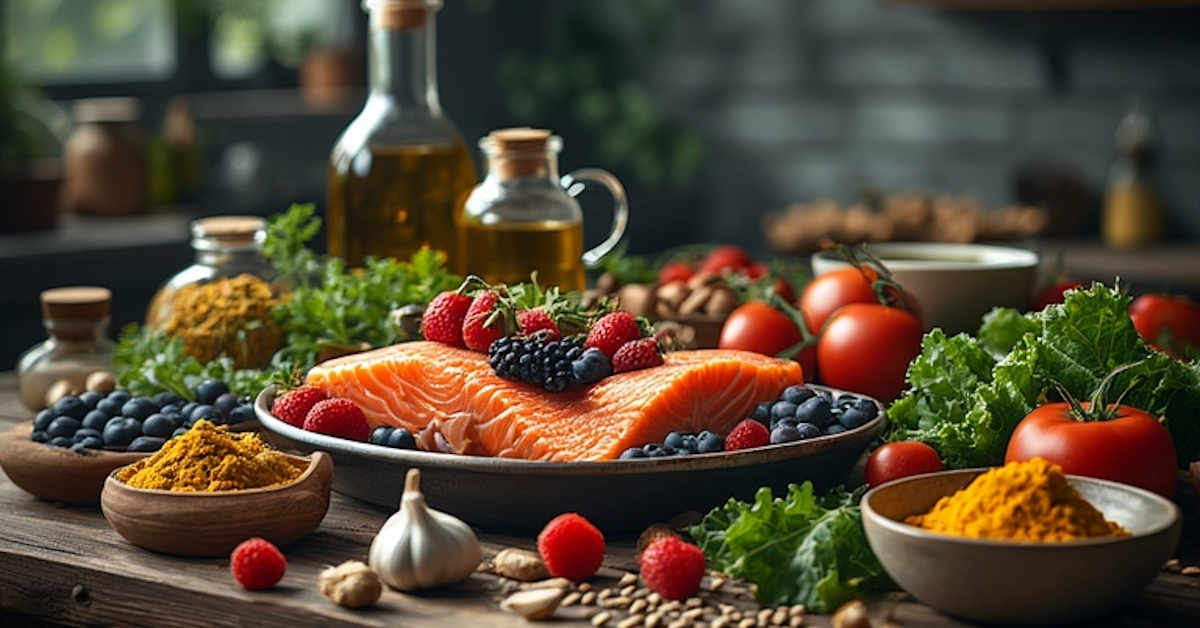
The original version of this article listed nine common options. Below is the same set, upgraded with context on why each one appears so often—and the limits of what we can responsibly claim.
1) Fatty fish (omega-3 sources)
Fact: Fatty fish (such as salmon, sardines, mackerel, herring) are a dietary source of omega-3 fats, and eating fish regularly is recommended by major heart-health groups as part of an overall pattern. :contentReference[oaicite:4]{index=4}
Interpretation: In practice, fish tends to replace other proteins that may be higher in saturated fat. That “replacement effect” may matter as much as the omega-3 story.
If you’re exploring protein tradeoffs more broadly, this internal guide can help frame it: protein intake by age—what changes, what doesn’t.
2) Leafy greens
Fact: Dietary guidelines consistently emphasize vegetables (including dark leafy greens) as foundational foods in healthy patterns. :contentReference[oaicite:5]{index=5}
Interpretation: Inflammation talk aside, leafy greens often function as a “diet quality marker”—people who eat more of them usually have higher fiber and micronutrient intake overall.
3) Berries
Fact: Fruits are a core component of recommended dietary patterns, and berries are one easy way people increase fruit intake without adding much to cooking time. :contentReference[oaicite:6]{index=6}
Interpretation: When studies find benefits tied to berries, it’s hard to separate the berry itself from the broader pattern (more fruit, less dessert, more fiber). That’s not a flaw—it’s how real diets work.
4) Nuts and seeds
Fact: Nuts and seeds are repeatedly included in recommended dietary patterns and are common in Mediterranean-style approaches. :contentReference[oaicite:7]{index=7}
Interpretation: They’re also an easy “swap food” (replacing chips or sweets), which may be one reason they correlate with better outcomes in observational research.
5) Olive oil
Fact: Unsaturated fats (including oils like olive oil) are widely used in Mediterranean-style dietary patterns that are linked to long-term health benefits. :contentReference[oaicite:8]{index=8}
Interpretation: Olive oil’s role is often overstated as a standalone remedy. In the evidence, it usually appears as part of a whole pattern: vegetables, legumes, seafood, and fewer ultra-processed foods.
6) Tomatoes
Fact: Tomatoes count toward vegetable intake in many dietary frameworks and are commonly consumed in varied forms. :contentReference[oaicite:9]{index=9}
Interpretation: The “tomato question” is often really a “food context” question: tomatoes on a salad are not the same exposure as tomatoes inside heavily processed foods.
7) Turmeric (as a culinary spice)
Fact: Turmeric is widely used as a spice, and its active compounds are studied for potential effects—but research quality, dosing, and safety questions vary widely across supplements versus food use. :contentReference[oaicite:10]{index=10}
Interpretation: In a food context, turmeric is best understood as part of an overall dietary pattern, not a “fix.” If you see very strong claims, they’re often extrapolated from supplement studies or lab work rather than everyday eating.
8) Garlic
Fact: Garlic is a common culinary ingredient in many traditional diets associated with favorable health outcomes.
Interpretation: Like spices generally, garlic’s biggest “real world” value may be that it helps people cook more satisfying meals at home—often displacing ultra-processed options.
9) Green tea
Fact: Unsweetened tea contributes to hydration and is commonly studied for its bioactive compounds, but population outcomes depend heavily on the overall diet pattern (and what’s added to the drink). :contentReference[oaicite:12]{index=12}
Interpretation: Many benefits attributed to green tea may reflect a cluster of behaviors (less sugary beverages, different meal patterns) rather than tea acting like medicine.
Why this matters specifically for adults 25–55
This age range is where long-term risk factors often accumulate quietly—while daily life gets louder.
Interpretation: For many adults, “inflammation” becomes a catch-all label for what’s really a systems issue: chronic stress, fragmented sleep, less movement, and food environments that make ultra-processed eating the default.
If you want the bigger context from within PainlessThings, these internal explainers connect the dots without turning it into hype:
- how inflammation is discussed in modern health conversations
- what ultra-processed foods change in a diet pattern
- why “best diet” debates often miss the point
Systems and environment: the modern drivers people overlook
Fact: National dietary guidance emphasizes building healthy patterns over time—because day-to-day food environments strongly shape what people actually eat.
Interpretation: The “anti-inflammatory” conversation can get stuck at the ingredient level (blueberries, turmeric, olive oil) while ignoring bigger forces:
- Work schedules that compress meal planning time
- Convenience food pricing and availability
- High screen time (and stress-eating loops)
- Sleep debt that nudges appetite and food choice
Related internal reads, if you want to explore the non-food side of the pattern:
- sleep deprivation and why it shows up in health outcomes
- how stress gets discussed in everyday medical conversations
- why simple movement (like walking) is studied so often
What people commonly misunderstand
Misunderstanding 1: “Anti-inflammatory” is a product label
Fact: Public dietary guidance focuses on overall dietary patterns, not single superfoods or branded “anti-inflammatory” products.
Interpretation: A package can say “anti-inflammatory” while still being an ultra-processed food with lots of added sugars, refined starches, or added sodium. The label often describes marketing, not evidence quality.
Misunderstanding 2: If a food is “healthy,” more is always better
Interpretation: In nutrition research, benefits often come from what a food replaces. Adding olive oil to an already high-calorie diet is not the same as using it instead of butter. The same logic applies to nuts, fish, and even fruit.
Misunderstanding 3: Supplements and spices are the same thing
Fact: NIH’s NCCIH notes that turmeric is widely used, but evidence and safety considerations vary—especially when concentrated products or supplements are involved.
Interpretation: Most of the “headline claims” people repeat come from supplement-style dosing, not normal culinary use.
Where evidence is limited or uncertain
Fact: Many nutrition findings are observational: researchers observe dietary patterns and health outcomes over time, which can show associations but can’t fully prove cause and effect.
Interpretation: That means it’s wise to be cautious about statements like “this food reduces inflammation” as if it were a direct, guaranteed mechanism in every person. Stronger confidence usually comes from:
- Consistent findings across many studies
- Plausible mechanisms that match human trials
- Results that still hold when lifestyle factors are accounted for
Big-picture framing: think “diet quality,” not “inflammation hacks”
Interpretation: A practical way to read anti-inflammatory food lists is as a shortcut for higher-quality eating: more plants, more fiber, more unsaturated fats, and fewer ultra-processed defaults.
Seen this way, the list isn’t wrong—it’s just incomplete without the context of stress, sleep, movement, and food environment.
Conclusion
Most “doctor-recommended anti-inflammatory foods” are not mysterious. They’re the familiar building blocks of dietary patterns that show up again and again in public health guidance and long-running nutrition research.
If there’s one takeaway that holds up well, it’s this: the strongest evidence points to patterns, not miracle ingredients—and the biggest wins often come from what these foods replace.
Informational note: This article is for general education only and does not provide medical advice, diagnosis, or treatment. If you have symptoms, a health condition, or dietary restrictions, consider discussing food changes with a qualified clinician who knows your context.
Resources
- MedlinePlus (NIH): Immune response and inflammation (Medical Encyclopedia)
- DietaryGuidelines.gov: Dietary Guidelines for Americans (2020–2025) resources
- Dietary Guidelines for Americans (2020–2025) (PDF)
- American Heart Association: Fish and omega-3 fatty acids
- NIH NCCIH: Turmeric—usefulness and safety